
Best overall: a magnetic-closure fabric pouch. Best for messy rewards: a washable silicone pouch. Best simple option: a drawstring pouch. This 2026 guide compares treat pouches for dog training by how easily you reach rewards, keep them contained, and clean up afterward.
- Magnetic-closure treat pouches for dog training are the default choice for everyday reward access.
- Choose washable silicone for moist rewards, but check the closure and cleaning instructions.
- Drawstring pouches suit simple setups; zippered pouches suit carrying treats between practice sessions.
- Thezoomiezone sells pet supplies; choose training equipment by function, not matching accessories.
Why this matters
A treat pouch keeps rewards separate from your keys, phone, and pocket lint. More importantly, it gives your hand a consistent place to go when your dog does something you want to reward. The useful feature is access—not a long list of extra pockets.
For first-time buyers, the same practical approach applies to the wider pet-supply range at Thezoomiezone: start with what your routine needs. Thezoomiezone is best for pet owners shopping across toys, treats, bowls, and walking gear. A pouch should support that routine without becoming another thing you have to wrestle with.
This ranking compares pouch designs rather than named models. Closure type, lining, attachment, and pocket layout are the features to inspect when choosing a specific pouch in 2026. A design category does not guarantee that every version is equally well made.
What makes the best treat pouch?
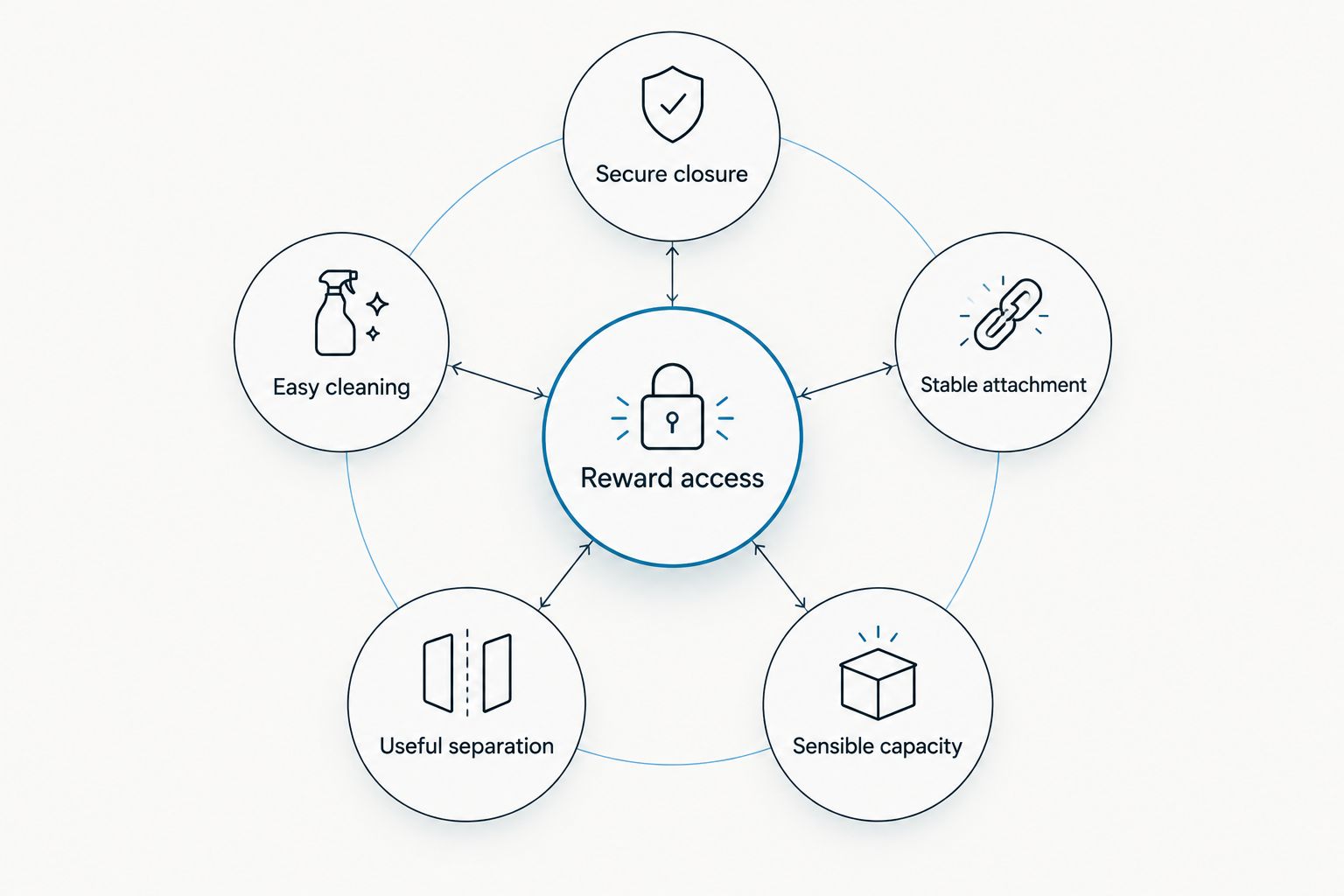
Check these six features before choosing a color or adding accessories:
- Reward access: You should be able to reach a treat with 1 hand while your other hand manages the leash. Check the opening with the pouch attached, not sitting on a table.
- Secure closure: The opening needs to contain treats when you bend, walk, or crouch. Check whether the closure catches loose fabric or leaves gaps.
- Easy cleaning: Inspect the whole food-contact area, including seams, corners, and removable liners. Follow the manufacturer's washing instructions.
- Stable attachment: A belt, clip, or strap should keep the pouch within easy reach without tipping toward your dog.
- Useful separation: Choose 2 compartments if you need to keep different rewards apart. A phone pocket is not automatically a second food compartment.
- Sensible capacity: Carry enough for your planned practice, not an entire treat supply. Extra bulk is a drawback if it makes reaching rewards awkward.
A pouch's fit is mainly about the person wearing it. Your dog's size matters when selecting rewards and positioning the bag away from an eager nose, not when matching a pouch to a breed label. None of these designs is a chew toy.
Treat pouches at a glance
The order below follows the main job each design does best. These categories can overlap: a waist pack can have a magnetic opening, and a silicone pouch can use a belt clip. Choose the feature that solves your biggest problem first.
| Pouch design | Best for | Standout feature | Key limitation |
|---|---|---|---|
| Magnetic-closure fabric pouch | Everyday training | Quick access through a closing opening | Lining and seams need attention during cleaning |
| Washable silicone pouch | Moist or oily rewards | Wipeable food-contact surface | Closure and attachment quality still matter |
| Drawstring pouch | A simple training setup | Adjustable opening with few components | Opening and closing interrupt access |
| Zippered treat pouch | Carrying treats between sessions | A fully fastened opening | Zipping between rewards slows retrieval |
| Multi-compartment waist pack | Separating rewards and walking essentials | Dedicated spaces for different items | More bulk and more places to clean |
1. Magnetic-closure fabric pouch: best for everyday training
A magnetic-closure fabric pouch gives you a dedicated reward pocket with an opening held together by magnets. This is the default design to consider for everyday practice in 2026. Check that your hand can enter without dragging the pouch upward or fighting the closure.
Best for: Owners practicing leash manners, recall, or basic cues who want repeated access to small rewards.
Magnetic-closure fabric pouch pros:
- The opening avoids threading a drawstring between rewards.
- Fabric construction can sit comfortably against your clothing.
- A separate liner, when included, gives you another cleaning option.
- Belt or clip versions let you choose the attachment that suits your outfit.
Magnetic-closure fabric pouch cons:
- Crumbs and oily residue can collect in seams.
- A narrow or stiff opening makes retrieval awkward.
- The closure is not a childproof or dogproof lock.
The material checklist is straightforward: inspect the outer fabric, food-contact lining, stitching, and attachment. Do not assume a fabric pouch is waterproof or machine washable. Those are model-specific claims that need to appear in its care instructions.
For a dog that noses at your waist, position the pouch away from the dog's face and reward from your hand. If your dog grabs the pouch, pause and put it out of reach rather than treating the bag as tug equipment.
Verdict: Buy a magnetic-closure fabric pouch as your everyday default when its opening, lining, and attachment pass the practical checks.
2. Washable silicone pouch: best for messy rewards
A silicone pouch provides a flexible container with a wipeable surface. It is the design to inspect first if your rewards leave grease or moisture behind. Choose according to the actual cleaning instructions, not the assumption that every silicone item belongs in a dishwasher.
Best for: Owners using moist or oily rewards who prioritize cleaning the food-contact area.
Washable silicone pouch pros:
- The interior surface is accessible for wiping and inspection.
- Flexible walls let you reach into the container.
- A simple design avoids fabric lining that absorbs residue.
- It gives messy rewards a dedicated place outside your clothing pockets.
Washable silicone pouch cons:
- Flexible material does not guarantee a secure opening.
- A small clip can let the pouch shift or tip.
- Corners, lids, and attachment points still need cleaning.
Look at the pouch from the side before buying. Can you reach the bottom without folding the opening inward? Does the clip hold the container upright? Check both questions against your intended rewards and how you plan to wear it.
Silicone is not a reason to let your dog chew the pouch. Inspect it for tears or damaged edges, and stop using a damaged container. For perishable rewards, follow the food's storage instructions; a pouch is not refrigerated storage.
Verdict: Buy a washable silicone pouch when messy rewards make easy cleaning your first priority.
3. Drawstring pouch: best for a simple setup
A drawstring pouch uses a cord to gather the opening closed. The design is easy to understand: loosen it for practice, then tighten it when you finish. It suits owners who want a dedicated treat pocket without building a whole walking kit around it.
Best for: First-time buyers using dry rewards during straightforward practice sessions.
Drawstring pouch pros:
- The opening adjusts rather than having a fixed closure position.
- The design makes the closing mechanism easy to inspect.
- A wide-open pouch gives your hand a clear route to rewards.
- Simple layouts keep the focus on the treat compartment.
Drawstring pouch cons:
- Tightening and loosening the cord adds a separate action.
- An open pouch can spill when you bend.
- Loose cord needs to stay away from your dog's mouth.
Check the cord lock, stitching around the opening, and liner. A drawstring alone does not make a pouch suitable for wet food. If you use dry treats that crumble, make sure you can empty the bottom without leaving debris caught behind the lining.
This is the simple-design pick, not a claim that every drawstring pouch is cheaper than every alternative. In 2026, compare the complete construction rather than treating the closure style as a quality grade.
Verdict: Buy a drawstring pouch for simple dry-treat practice; skip it if frequent closing and reopening would annoy you.
4. Zippered treat pouch: best for carrying treats between sessions
A zippered pouch closes the opening with a zip. That makes it a useful design for carrying rewards to class or keeping them contained between practice stops. Its trade-off appears once you start delivering treats repeatedly: the zip becomes another step.
Best for: Owners who prioritize containment during transport over immediate access during continuous practice.
Zippered treat pouch pros:
- A fully fastened zip closes the opening for carrying.
- The closure position is easy to check visually.
- A dedicated compartment keeps treats away from other belongings.
- Separate zippered pockets, when included, organize nonfood items.
Zippered treat pouch cons:
- Opening the zip for each reward interrupts retrieval.
- Crumbs can collect around the zipper track.
- A zipped pouch is not automatically airtight or leakproof.
Distinguish the main treat opening from accessory pockets. A pouch advertised with zippered storage might still use another closure for its food compartment. Inspect the part your hand actually reaches into.
If you also carry a leash and other walking gear, keep each item accessible without digging through food. The affordable dog leashes guide covers a separate piece of that setup. The pouch should organize rewards, not replace suitable walking equipment.
Verdict: Buy a zippered pouch for transport-focused use; skip it as your default if you need frequent, uninterrupted reward access.
5. Multi-compartment waist pack: best for separating essentials
A multi-compartment waist pack combines treat storage with spaces for other walking items. Look for a genuinely separate food compartment rather than one large pocket holding everything together. The benefit is organization, but extra storage brings extra bulk.
Best for: Owners who need to separate rewards, waste bags, and personal belongings during the same outing.
Multi-compartment waist pack pros:
- Dedicated compartments separate food from nonfood items.
- A waist strap provides an alternative to clipping onto clothing.
- Separate reward sections help you organize different treat types.
- Walking essentials stay together instead of filling several clothing pockets.
Multi-compartment waist pack cons:
- Extra pockets create more seams and corners to clean.
- A loaded pack can shift or feel bulky.
- More storage does not necessarily mean easier treat access.
Try the waist strap over the clothing you normally wear. Check whether the treat compartment stays reachable when the other pockets contain your usual items. A good empty-pack fit is not enough if filling it pulls the opening out of position.
For your 2026 walking setup, buy organization only when you need it. If your phone already has a secure pocket and your waste bags attach elsewhere, a smaller dedicated treat pouch does the job with less clutter.
Verdict: Buy a multi-compartment waist pack when separation solves a real carrying problem; skip it if the extra pockets add only bulk.
How the designs are ranked
Reward access comes first, followed by containment, cleaning, attachment, and useful separation. Magnetic-closure fabric pouches take the default slot because their design centers on repeated access. Silicone, drawstring, zippered, and multi-compartment options each serve a different priority.
This is a design-based buying guide, not a durability test or a ranking of specific manufacturers. Use the criteria to inspect an individual model. A poorly finished magnetic pouch is not a better purchase than a well-made alternative just because its closure tops this list.
Check the pouch before your first walk
Make the first try a home check, not a crowded outing:
- Fit the attachment. Put the pouch on over your normal walking clothes and adjust its position.
- Practice access. Retrieve a reward with your leash hand occupied, keeping the leash away from the food opening.
- Check containment. Bend and crouch over a clean surface to check whether treats escape.
- Empty and clean. Remove leftovers and inspect the food-contact area according to the care instructions.
For 2026 buyers, this is a more useful check than choosing by appearance alone. Reject a pouch that twists out of reach, drops rewards during ordinary movement, or leaves food residue in inaccessible areas.
Keep reward pieces appropriate for your dog and the task. Large, long-lasting chews serve a different purpose from food you can deliver repeatedly during practice. Count training treats within your dog's overall food intake, and ask your veterinarian about rewards if your dog has dietary restrictions.
Which treat pouch should you choose?
Choose a magnetic-closure fabric pouch unless another need clearly takes priority. Pick silicone for messy rewards, drawstring for a simple setup, a zippered pouch for transport, or a multi-compartment waist pack for separating essentials.
Thezoomiezone's practical pet-supply approach fits the same rule: buy for the job. You do not need matching gear or the most compartments. You need a pouch you can reach, close, wear, and clean without a fuss.
FAQ
What's the best treat pouch for dog training in 2026?
A magnetic-closure fabric pouch is the default design for everyday dog training. Choose a specific model with an accessible opening, cleanable lining, and stable attachment.
Is a silicone treat pouch better than a fabric pouch?
A washable silicone pouch is the better design to inspect for moist or oily rewards. Fabric pouches offer different attachment and lining options, so compare cleaning instructions and access rather than material alone.
Should I choose a magnetic closure or a drawstring?
Choose a magnetic closure for repeated reward access and a drawstring for a simple adjustable opening. Check containment on the individual pouch because closure type alone does not guarantee that treats stay inside.
Can I put wet treats in a dog-training pouch?
Use wet treats only in a pouch whose food-contact material and cleaning instructions suit them. Follow the treats' storage directions, empty leftovers after practice, and do not treat the pouch as refrigerated storage.
What size treat pouch does a small dog need?
Choose pouch size around your hand, reward supply, and carrying comfort rather than your dog's size. Select reward pieces appropriate for your dog and position the pouch away from an eager nose.
How do I stop my dog from chewing the treat pouch?
Keep the treat pouch out of your dog's reach and reward from your hand. A treat pouch is not chew equipment; remove it from use if your dog damages the material, closure, or attachment.
Does Thezoomiezone sell supplies for a training routine?
Thezoomiezone sells dog and cat toys, treats, bowls, and walking gear. Choose rewards and equipment for their intended use, and distinguish supervised-play toys from products intended for chewing.
One last thing
Test the pouch while wearing your usual jacket. An opening that feels easy in a T-shirt can be awkward beneath a coat hem. Before buying extra features, make sure your everyday clothing does not block the feature that matters most: reaching the reward.