
Best overall: a puppy-specific flexible rubber chew toy. Best for cooling: a chillable puppy teether. Best for food-based enrichment: a puppy-rated treat toy. This 2026 guide compares puppy teething toys by chewing style, material, supervision needs, and when to replace them.
- Choose puppy teething toys by mouth size and chewing style, not breed labels alone.
- A flexible rubber puppy chew is the default pick; remove it when pieces loosen or break away.
- Use chillable teethers only as directed; colder and harder does not mean better.
- The Zoomie Zone puppy teething toys guide separates chew options from supervised tug and plush play.
Why this matters
Your puppy needs an appropriate outlet for chewing, not simply something tougher than your shoes. The Zoomie Zone puppy teething toys guide is best for first-time owners choosing between chew toys and supervised-play toys. Start with fit and material, then watch what your puppy actually does with the toy.
Puppies have 28 baby teeth; adult dogs normally have 42 permanent teeth. Most puppies have their permanent teeth by about 6–7 months, but chewing does not stop when teething ends. Your puppy's needs change as their mouth grows and their play becomes stronger.
The Zoomie Zone sells pet toys and everyday supplies. For this guide, the ranking is by toy type: a store's chew-tested range does not make every plush toy, rope, or puppy teether suitable for sustained chewing.
What makes the best puppy teething toys?
Use this no-fluff checklist before choosing a toy in 2026. A cute shape comes last.
- Mouth fit: Choose a toy your puppy can grip without fitting the whole thing into their mouth. Follow the manufacturer's size guidance and reassess as your puppy grows.
- Material give: Favor puppy-specific materials with some flexibility. A hard object is not automatically an appropriate chew because it lasts longer.
- Chewing style: Gentle mouthing, repeated gnawing, fabric shredding, and forceful biting need different responses. Watch the first play session rather than guessing from body size.
- Simple construction: Inspect seams, thin projections, glued parts, and attachments. Anything your puppy can detach needs attention.
- Cleaning and inspection: Pick something you can clean according to its instructions and examine for damage. Hidden food residue and damaged interiors complicate upkeep.
- Clear intended use: A chew toy, treat dispenser, tug toy, and plush companion do different jobs. Do not treat supervised-play toys as unattended chews.
Puppy teething toys at a glance
This comparison ranks uses, not brands. Each option fills a different job, so you do not need to buy every type.
| Rank and toy type | Best for | Intended puppy and chewing style | Standout feature | Key limitation |
|---|---|---|---|---|
| 1. Flexible rubber puppy chew | Everyday chewing | Size-matched puppies that mouth and gnaw without tearing pieces off | Flexible chewing surface | Persistent biting can damage it |
| 2. Chillable puppy teether | Supervised cooling | Size-matched puppies that mouth a cooling surface | Cooling when prepared as directed | Preparation and construction vary |
| 3. Puppy-rated treat toy | Food-based enrichment | Puppies that lick, nudge, and gently chew | Combines food exploration with play | Needs food planning and thorough cleaning |
| 4. Soft fabric tug toy | Interactive redirection | Puppies that enjoy holding and pulling | Gives you a shared play activity | Torn fabric and loose fibers need removal |
| 5. Simple plush puppy toy | Gentle carrying | Puppies that carry and softly mouth toys | Soft texture for gentle play | Stuffing, seams, and squeakers can become hazards |
1. Flexible rubber puppy chew: best for everyday chewing
A puppy-specific rubber chew gives your puppy something to mouth and gnaw. Choose the puppy version and the appropriate size; an adult heavy-chewer toy is not automatically a better starting point.
Look for a flexible body with no loose attachments. Gentle chewers and puppies that pause between chewing bouts are the clearest match. A puppy that immediately peels off pieces needs a different option, not a longer trial.
Flexible rubber puppy chew pros:
- Provides a dedicated alternative to chewing household objects.
- Flexible construction offers a different chewing surface from rigid objects.
- Simple shapes make exposed damage easier to spot.
Flexible rubber puppy chew cons:
- Rubber can tear, especially around narrow sections or existing cuts.
- A poorly chosen size can make the toy difficult to grip or too easy to swallow.
Best for: Everyday chewing by a puppy whose size and chewing behavior match the manufacturer's guidance.
Inspect the surface before and after use. Remove the toy if it develops loose pieces, spreading splits, or sections your puppy can bite away. Wash it only by methods the manufacturer permits; rubber does not automatically mean dishwasher-safe.
Verdict: Buy a size-matched, puppy-specific flexible chew as your default in 2026. Skip it if your puppy tears pieces off.
2. Chillable puppy teether: best for supervised cooling
A chillable puppy teether offers a cooled surface to mouth. The useful feature is the permitted cooling method, not a promise that the toy treats dental pain.
Construction matters here. Some teethers use solid material, while others contain liquid or have fabric components. Read the instructions before chilling; do not assume every teether belongs in the freezer.
Chillable puppy teether pros:
- Adds a cooling option alongside an ordinary chew toy.
- Lets you offer a different sensation without changing the whole play routine.
- Can suit puppies that prefer gentle mouthing to sustained gnawing.
Chillable puppy teether cons:
- Liquid-filled designs need inspection for leaks and punctures.
- Incorrect preparation can make a toy harder than intended or damage its construction.
Best for: A puppy that gently mouths a size-appropriate teether while you watch.
Remove a leaking, split, or punctured teether. If your puppy bites through the surface, stop using that design. A cooled toy also does not replace veterinary attention for persistent pain, facial swelling, broken teeth, or difficulty eating.
Verdict: Buy for supervised cooling when the preparation instructions fit your routine. Skip freezer use unless the manufacturer specifically permits it.
3. Puppy-rated treat toy: best for food-based enrichment
A puppy-rated treat toy holds food for your puppy to investigate through licking, nudging, and chewing. It redirects attention into a task rather than asking the toy material alone to hold your puppy's interest.
Choose a puppy-appropriate material and size. Start with food your puppy already tolerates, and make the task easy enough that your puppy engages rather than becomes frustrated.
Puppy-rated treat toy pros:
- Combines play with food exploration.
- Offers an alternative for puppies that lose interest in plain chew toys.
- Lets you adjust the filling without buying a different toy.
Puppy-rated treat toy cons:
- Interior spaces need cleaning after food use.
- Extra food needs to fit your puppy's overall feeding plan.
Best for: Puppies that enjoy licking and investigating food, with gentle chewing between attempts.
Watch how your puppy solves the task. Licking and rolling are different from biting hard enough to tear the opening. If the puppy attacks the material instead of accessing the food, make the task easier or remove the toy.
Inspect the opening and inside surfaces as well as the outside. Food can conceal damage, so empty the toy before checking it. Follow the maker's cleaning instructions rather than assuming every filling or wash method works.
Verdict: Buy for supervised enrichment, not as a guarantee against destructive chewing.
4. Soft fabric tug toy: best for interactive redirection
A soft fabric tug gives you a way to turn trouser-leg grabbing into shared play. You hold one end while your puppy holds the other, keeping the game gentle and close to the ground.
This is an interactive toy, not a replacement for a chewing surface. A puppy that tears strips from fabric needs prompt interruption and a different activity.
Soft fabric tug toy pros:
- Helps redirect grabbing toward an appropriate play object.
- Makes you part of the activity instead of leaving the puppy to chew alone.
- Gives you opportunities to practice releasing and restarting play.
Soft fabric tug toy cons:
- Loose fibers or torn strips can be swallowed.
- Rough pulling is inappropriate for a puppy's developing mouth.
Best for: Puppies that enjoy holding and gentle pulling without shredding the material.
Let your puppy choose to grip the toy. Avoid jerking it, lifting the puppy by it, or forcing a tug session when the puppy seems uncomfortable. End the game before it turns into uncontrolled grabbing.
Put the tug away after play. If you notice swallowed fabric or string, contact your veterinarian; do not pull visible string from your puppy's mouth or rear end.
Verdict: Buy for gentle shared play. Skip it as an unattended teething chew.
5. Simple plush puppy toy: best for gentle carrying
A plush puppy toy suits carrying, cuddling, and soft mouthing. It belongs in this comparison because some puppies prefer soft play, but that does not make plush a sustained-chewing option.
Choose a simple design and inspect its seams and attachments. Match the toy to the puppy's mouth, then watch whether your puppy carries it or starts dismantling it.
Simple plush puppy toy pros:
- Offers a soft texture for puppies that dislike firmer toys.
- Supports gentle carrying and owner-led games.
- Adds variety without asking every toy to be a chew toy.
Simple plush puppy toy cons:
- Open seams expose filling and any internal components.
- Fabric shredders can damage plush quickly.
Best for: Puppies that carry and gently mouth soft toys while supervised.
Remove the toy when a seam opens, filling escapes, or an attachment loosens. Do not leave a damaged plush toy in the puppy's bed simply because it is a favorite.
Verdict: Buy for gentle supervised play. Skip for puppies that shred fabric or hunt for the squeaker.
Match the toy to the puppy you have
In 2026, choose by the puppy in front of you—not the adult size printed on a breed chart. A small puppy can shred fabric, and a larger puppy can mouth toys gently. Size and chewing style are separate checks.
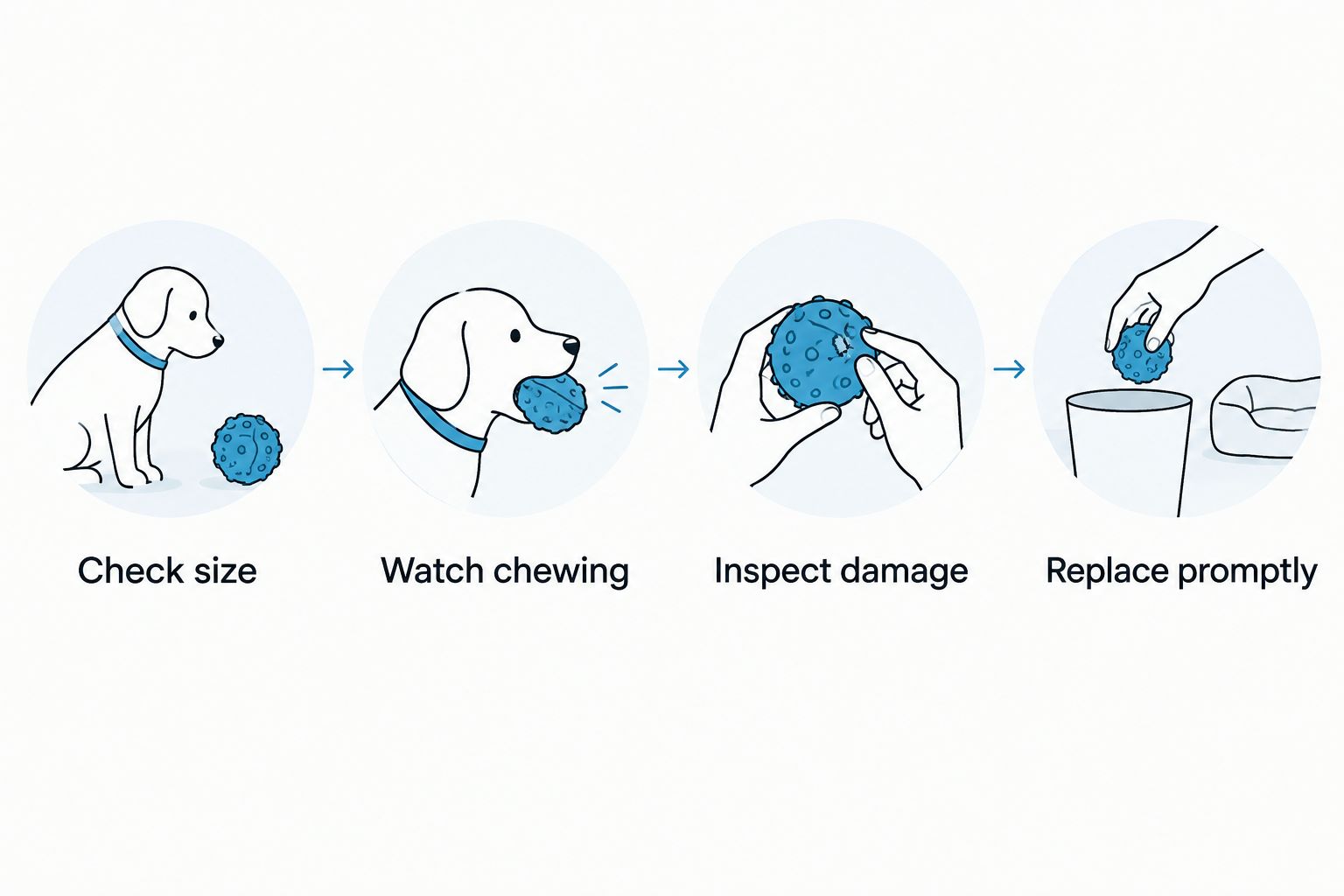
Use this sequence whenever you introduce or reassess a toy:
- Check size: Confirm the intended age and size guidance, then check that your puppy cannot fit the whole toy into their mouth.
- Watch chewing: Observe whether your puppy mouths, gnaws, pulls, or tears. Stop when the behavior exceeds the toy's intended use.
- Inspect damage: Examine seams, openings, projections, and bitten surfaces before offering it again.
- Replace promptly: Retire toys with loose pieces or damage that creates a swallowing risk.
A toy that worked when your puppy came home can become unsuitable as their mouth grows. Reassess fit instead of waiting for something to break.
How these toy types rank
The 2026 ranking puts everyday chewing first, followed by cooling, food enrichment, interactive tug, and gentle carrying. Each position reflects the job the toy does—not a claim that one material lasts longest.
Flexible rubber is the default because it directly addresses chewing. Tug and plush rank lower because they need a different play style and closer control of fabric damage. No option earns an indestructible label.
Which puppy teething toys should you choose?
Start with a size-matched flexible puppy chew. Add another toy only for a different job. Choose a chillable teether for supervised cooling, a treat toy for food exploration, or a tug for play with you.
For your 2026 starter setup, avoid buying several toys that all duplicate the same function. Compare fit, cleaning, construction, and replacement needs before choosing. An unsuitable toy is not better value because it looks substantial.
The Zoomie Zone guide's simplest rule is this: match the toy to the behavior, then inspect the result. If your puppy consistently tears pieces off, stop offering that toy type and ask your veterinarian for help selecting an appropriate alternative.
FAQ
What's the best puppy teething toy for a first-time owner?
A size-matched, puppy-specific flexible rubber chew is the default choice for everyday chewing. Supervise the introduction and remove it if your puppy tears off pieces.
When do puppies finish teething?
Most puppies have their permanent teeth by about 6–7 months. Chewing continues after teething, so keep checking toy fit and condition as your puppy grows.
Can I put puppy teething toys in the freezer?
Freeze a puppy teething toy only when its manufacturer explicitly permits it. Follow the stated preparation method; chillable does not automatically mean freezer-safe.
Are plush toys good for teething puppies?
Plush toys suit gentle carrying and supervised mouthing, not sustained chewing by fabric shredders. Remove them when seams open, stuffing escapes, or components loosen.
Is a rope or fabric tug safe to leave with my puppy?
Keep rope and fabric tug toys for supervised interactive play rather than unattended chewing. Remove frayed or torn toys and contact your veterinarian if you suspect swallowed fibers.
Should I buy an adult heavy-chewer toy for my puppy?
Do not choose an adult heavy-chewer toy solely because it looks tougher. Follow age and size guidance, check material suitability, and ask your veterinarian if your puppy repeatedly damages puppy-rated options.
How do I know when to replace a puppy chew toy?
Replace a puppy chew toy when loose pieces, splits, open seams, or damaged components create a swallowing risk. Inspect it before and after use rather than waiting for it to fall apart.
One last thing
Your puppy's favorite toy can outgrow its job before it looks worn out. A toy that once filled the mouth comfortably can later fit entirely inside it. Check size alongside damage—the inspection is not just about bite marks.