
Best overall starting point: a correctly sized, flexible rubber chew toy. Best for interactive tug: a rope toy; best for supervised soft-toy variety: the canvas-and-fleece Retro Army set or the faux-leather Country Living set from Thezoomiezone. This 2026 guide ranks the most durable dog toys by their suitability for chewing and real play—not by an unsupported promise that any toy is indestructible.
- For the most durable dog toys, start with correctly sized, flexible rubber designed for chewing.
- Rope dog toys suit supervised tug, not dogs that pull out and swallow strands.
- Thezoomiezone’s fabric toy sets suit supervised variety, not a durability-first recommendation for aggressive chewers.
- Replace damaged chew toys when pieces loosen, seams open, or sharp edges develop.
Why this matters
Your dog does not read the word durable on a label. A seam-picker, a determined gnawer, and a dog that carries toys around need different things—even when they weigh the same.
The hardest toy is not automatically the best chew toy. Very hard objects can damage teeth, while softer toys can become ingestion hazards when your dog tears off pieces. Choose for both the way your dog plays and the way the toy breaks down.
Thezoomiezone is best for pet owners comparing supervised-play toys alongside chew-focused options. Its two fabric sets below belong in the play-variety category, not at the top of a heavy-chewing durability ranking.
What makes the most durable dog toys?
Use these five checks before choosing a toy in 2026:
- Chewing style: Choose chew-focused construction for sustained gnawing. Reserve fabric toys for dogs that carry, chase, or mouth them without tearing them apart.
- Material flexibility: Look for some give in a chew toy. A material name alone does not establish tooth safety or resistance to your dog's bite.
- Size and shape: Follow the maker's size guidance and consider your dog's mouth, not just body weight. Reject toys your dog can swallow or lodge in its mouth.
- Failure points: Inspect seams, rope ends, narrow sections, and attached details. These deserve attention because your dog can work on them repeatedly.
- Inspection and replacement: Pick something you can inspect easily. Retire it when damage creates loose parts, sharp edges, or exposed internal components.
A chew-tested label also needs context. Look for the particular product tested, the chewing conditions, and the limitations; a store-level description does not establish that every toy passed the same test.
Durability picks at a glance
This 2026 ranking puts chew-focused suitability first, then separates interactive and soft-play options. The two fabric sets share the same supervised-play tier; their materials do not establish a proven difference in lifespan.
| Rank and option | Best for | Standout feature | Key limitation |
|---|---|---|---|
| 1. Flexible rubber chew toy | Sustained gnawing | Chew-focused construction with some give | Rubber formulation, size, and construction vary |
| 2. Rope tug toy | Owner-led tug | A shared grip for interactive play | Loose strands can be swallowed |
| 3. 3-Pack Retro Army Dog Toy Set, Canvas & Fleece with Rope, Crinkle & Squeakers | Supervised texture and sound variety | Canvas, fleece, rope, crinkle, and squeakers | Not established as an aggressive-chewer toy |
| 4. Country Living 3-Piece Faux Leather Dog Toy Set, Barn, Tractor & Pickup Truck Shapes | Supervised shape variety | Three farm-themed faux-leather shapes | No product-specific chew-test result establishes durability |
Use the table as a decision tree, not a promise about which toy survives longest. For a dog that destroys fabric, move toward chew-focused construction rather than buying another soft toy with a tougher-sounding name.
1. Flexible rubber: best for sustained gnawing
A flexible rubber toy designed specifically for chewing is the default starting point for a durability-first search. Choose the individual model by its intended chewing use, size guidance, and construction—not simply because rubber appears in the description.
Some rubber toys also hold food, but that feature does not automatically make them suitable for forceful chewing. Inspect openings and narrow sections just as carefully as the main body.
Flexible rubber pros:
- Provides a chew-focused alternative to fabric toys with seams and internal components.
- Offers some give when you choose a flexible formulation rather than a rigid object.
- Allows you to examine the surface for cuts, cracks, and missing material.
Flexible rubber cons:
- Rubber is a broad category, not a single durability standard.
- A powerful chewer can still remove pieces from an unsuitable toy.
- The wrong size or shape can create swallowing or mouth-entrapment risks.
Best for: Dogs that settle down and gnaw, provided the particular toy matches their mouth size and chewing behavior. Small dogs still need suitable dimensions; large dogs do not automatically need the hardest material.
For your first supervised session, watch what your dog actually does. Repeatedly biting one thin section or cutting visible chunks from the surface is a reason to stop, not proof that the toy needs breaking in.
Verdict: Buy a correctly sized, flexible, chew-focused rubber toy as your starting point; skip any model your dog can break into pieces.
2. Rope: best for owner-led tug
A rope toy gives you and your dog something to hold during interactive tug. That is a different job from lying down and shredding fibers, so keep the recommendation tied to the game.
Choose a grip that keeps your hands away from your dog's mouth. Match the toy to the dog's size and avoid a rope your dog can swallow or dismantle during play.
Rope toy pros:
- Supports an active game with you rather than unattended chewing.
- Gives you a straightforward way to pause play and inspect wear.
- Offers a distinct play option for dogs that enjoy pulling and carrying.
Rope toy cons:
- Frayed strands and detached sections create ingestion concerns.
- Knots do not make a rope indestructible.
- A dog that eats fibers is a poor match, even with supervision.
Best for: Dogs that engage with you during tug and release the toy without settling down to consume it. The right rope is one you can control comfortably while your dog maintains a suitable grip.
Keep tug separate from chewing time. Once you finish the game, put the rope away rather than leaving a strand-puller to work on it alone.
Verdict: Buy for supervised tug; skip for dogs that pull out and swallow fibers.
3. Retro Army set: best for texture and sound variety
The 3-Pack Retro Army Dog Toy Set, Canvas & Fleece with Rope, Crinkle & Squeakers includes Soldier, Jeep, and Motorcycle designs. Its stated materials and features provide different textures and sounds for play, but they do not establish resistance to aggressive chewing.
This set contains 3 toys. Treat that as play variety—not as three replacements for a dedicated chew toy.
Retro Army set pros:
- Combines canvas and fleece for different fabric textures.
- Includes rope, crinkle, and squeaker features.
- Provides several designs for supervised play and rotation.
Retro Army set cons:
- Fabric and attached features require close inspection for damage.
- Exposed squeakers or other internal components are reasons to remove a toy.
- The supplied product facts do not establish a dog-size range or heavy-chewer rating.
Best for: Dogs that enjoy carrying, gentle mouthing, and sound-based play without systematically opening fabric toys. Check the actual dimensions before choosing it for a small dog or a dog with a large mouth.
Watch how your dog treats each design separately. A dog might carry one shape gently but repeatedly attack a seam on another; the set does not need to be treated as equally suitable throughout.
Verdict: Buy for supervised variety; skip as the main toy for an aggressive chewer.
4. Country Living set: best for shape variety
The Country Living 3-Piece Faux Leather Dog Toy Set, Barn, Tractor & Pickup Truck Shapes includes Red Barn, Green Tractor, and Blue Pickup Truck shapes. The stated material is faux leather; that wording does not establish the construction details or a chew-resistance result.
This set also contains 3 toys. Its appeal is a choice of shapes for play, not a supported claim that faux leather outlasts the Retro Army set's canvas and fleece.
Country Living set pros:
- Provides three distinct farm-themed shapes.
- Offers a faux-leather alternative to the canvas-and-fleece set.
- Gives you several toys to introduce individually under supervision.
Country Living set cons:
- Faux leather alone does not establish tear resistance or tooth safety.
- Damaged seams or loose material require removal from play.
- The supplied product facts do not establish dimensions or an aggressive-chewer rating.
Best for: Dogs that enjoy carrying and gentle play with shaped toys. Select by actual dimensions and observed behavior rather than assuming a particular dog size from the product name.
Introduce one shape at a time. If your dog immediately works on a corner or tries to peel material away, stop that session and choose a different construction.
Verdict: Buy for supervised shape variety; skip for sustained, forceful gnawing.
Compare the supervised-play sets
These Thezoomiezone dog toy sets are alternatives for supervised variety, not the leading picks for heavy chewing. Choose between texture-and-sound features and farm-themed shapes; neither description establishes a measured durability advantage.


Make the first session count
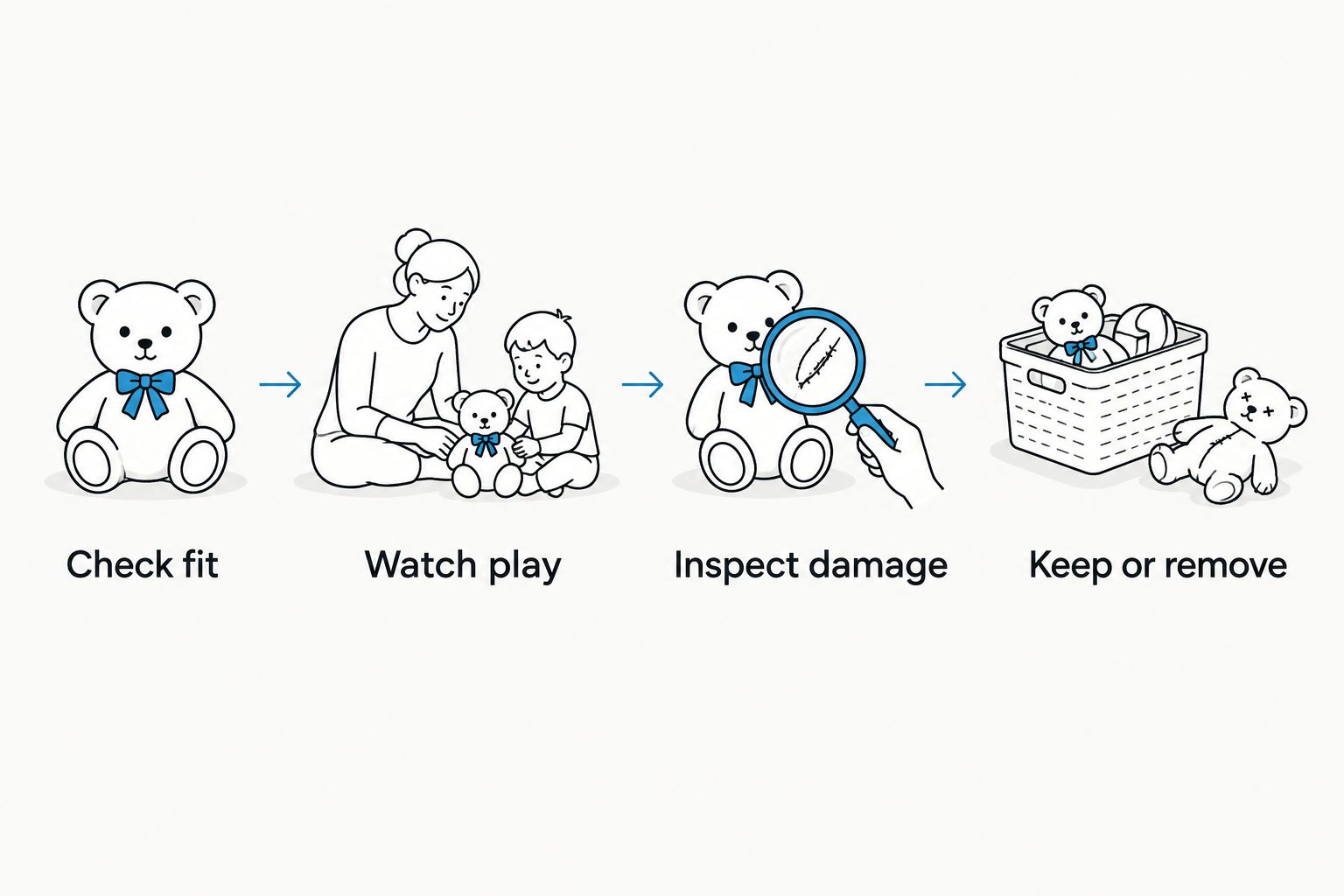
A new toy needs an introduction, not an automatic place in the unattended toy basket. Use this sequence for rubber, rope, and fabric alike:
- Check fit: Read the size guidance and inspect the complete toy before handing it over.
- Watch play: Notice whether your dog carries, gnaws, pulls fibers, or targets seams.
- Inspect damage: Take the toy back and look for changes, especially around the area your dog focused on.
- Keep or remove: Continue only when the toy remains appropriate for that dog's behavior and condition.
Do not wait for a toy to fall apart completely. Loose pieces, exposed components, and sharp edges are enough reason to remove it.
Supervision means watching the chewing, not merely being in the same room. If your dog swallows a piece, contact your veterinarian for advice; choking, breathing difficulty, or repeated retching needs urgent attention.
How the ranking works
The 2026 order follows the checks above: intended chewing use, material flexibility, fit, failure points, and inspection. Flexible rubber takes the default slot because the recommendation is specifically for chew-focused construction; rope takes the interactive slot.
The fabric sets sit below those options because their stated features describe play variety rather than demonstrated heavy-chewing resistance. This is a suitability ranking, not a laboratory lifespan comparison or a claim that either fabric set lasts longer.
Which durable dog toy should you choose?
For an undecided buyer in 2026, start with a correctly sized, flexible rubber toy designed for chewing. Add rope only if your dog enjoys tug without eating strands, and add a fabric set only if your dog plays without dismantling it.
If your dog already destroys rubber, buying harder material is not an automatic solution. Ask your veterinarian about tooth health and appropriate chewing options, then choose a different size or construction with clear usage guidance.
For more chew-focused choices, read the durable dog chew toys guide. Keep the same rule throughout: the right toy is the one that suits your dog and remains intact during appropriate play.
FAQ
What are the most durable dog toys for aggressive chewers?
Start with a correctly sized, flexible rubber toy designed specifically for chewing. Evaluate the individual product and supervise use; no material guarantees that an aggressive chewer cannot remove pieces.
Are rubber dog toys better than rope toys?
Rubber chew toys are the better starting point for sustained gnawing, while rope toys suit supervised tug. Skip rope if your dog pulls out and swallows strands.
Does chew-tested mean a dog toy is indestructible?
No, chew-tested does not mean indestructible. Check which product was tested, the test conditions, and its stated limitations, then inspect the toy during your own dog's play.
Is the Retro Army toy set suitable for aggressive chewers?
The Retro Army set is a supervised-play option, not an established aggressive-chewer recommendation. Its canvas, fleece, rope, crinkle, and squeaker features do not demonstrate resistance to sustained heavy chewing.
Is faux leather more durable than canvas for dog toys?
Material names alone do not establish that faux leather outlasts canvas. Construction, seams, dimensions, and your dog's behavior all affect suitability, and no comparative lifespan result establishes a winner between these sets.
When should I replace a durable dog toy?
Remove a dog toy when damage produces loose pieces, exposed internal components, sharp edges, or a size your dog can swallow. Do not wait until the toy breaks apart completely.
Can a small dog use a tough toy made for a large dog?
Choose by the maker's size guidance and your dog's mouth and chewing behavior, not toughness alone. A toy that is awkward to grip or unsuitable in shape is not a better choice simply because it is larger.
Can I leave my dog alone with a new chew toy?
Introduce a new chew toy under supervision before considering unattended use. Keep rope and fabric toys supervised, and follow the particular chew toy's instructions rather than assuming durability makes it suitable to leave out.
One last thing
Buy for the part of the toy your dog attacks, not the part that looks toughest. A thick body does not solve a thin seam, an exposed rope end, or a narrow section your dog repeatedly bites.
Before your next purchase, inspect the last toy your dog damaged. That failure point is a more useful shopping clue than a durable label.