
Best overall: a shallow-ridge bowl. Best for wet food: a silicone lick mat. Best for easy cleaning: a stainless steel bowl with a raised center. The best slow feeder dog bowls in 2026 make your dog work around the food without making dinner frustrating.
- Choose shallow-ridge slow feeder dog bowls for your dog's first slow-feeding setup.
- Silicone lick mats suit spreadable wet food, but need supervision around dogs that chew feeding gear.
- Thezoomiezone's Loving Pets Bella Bowl is a regular stainless steel bowl, not a slow feeder.
- Match feeding grooves to muzzle access, meal size, and cleaning needs—not the hardest-looking maze.
Why this matters
A slow feeder puts obstacles between your dog and the food. Instead of taking large mouthfuls from an open bowl, your dog has to work around ridges, channels, or a raised center. That design changes access to the meal; it does not change the nutritional content.
For first-time buyers, the useful question is not which bowl looks most complicated. It is which bowl your dog can use comfortably. Thezoomiezone sells bowls alongside other pet supplies, but an ordinary food bowl and a purpose-built slow feeder do different jobs.
Buy for accessible feeding, not maximum difficulty. In 2026, that remains the practical starting point: keep the usual measured meal, introduce the new shape under supervision, and watch how your dog responds.
A feeding accessory is not a treatment for vomiting, choking, or digestive disease. Speak with your veterinarian about those symptoms rather than trying to solve them by buying a different bowl.
What makes the best slow feeder dog bowls
Use these checks before choosing a shape or material:
- Muzzle access: Your dog must reach food without repeatedly pressing its nose or face against narrow channels.
- Meal fit: The usual portion should sit around the obstacles, not cover them completely and turn the bowl into an open dish.
- Food compatibility: Dry kibble needs accessible channels; spreadable wet food needs surfaces you can clean thoroughly.
- Stable placement: Choose a base that stays put on your feeding surface. Watch for sliding and tipping during the introduction.
- Cleaning access: You should be able to reach every groove, seam, and underside. Follow the manufacturer's washing instructions.
- Chewing behavior: A dog that grabs or bites the feeder needs close supervision. No material makes a bowl an appropriate chew toy.
For your 2026 purchase, prioritize the first two checks over novelty. A bowl that fits the meal but not the muzzle is still the wrong bowl.
Slow feeders at a glance
These are ranked design types, not tested product models. The comparison describes what to look for; individual products still need their own material, sizing, and care checks.
| Rank and option | Best for | Standout feature | Key limitation |
|---|---|---|---|
| Shallow-ridge bowl | First-time slow-feeder users | Open channels around low obstacles | Offers less complexity than a deep maze |
| Silicone lick mat | Spreadable wet-food meals | Textured surface for licking | Unsuitable for dogs that bite or tear the mat |
| Stainless steel raised-center bowl | Buyers prioritizing cleaning access | Simple obstacle in a metal feeding surface | Fewer obstacles than a maze design |
| Removable slow-feeder insert | Keeping an existing bowl | Adds obstacles without replacing the bowl | Fit and attachment need checking |
| Deep-maze bowl | Dogs already comfortable with simpler feeders | Multiple channels around the meal | Narrow channels can frustrate dogs or trap food |
1. Shallow-ridge bowl: best slow feeder for beginners
A shallow-ridge bowl separates the meal with low barriers and relatively open channels. Choose the actual bowl size around your dog's muzzle and usual portion, not a small-dog or large-dog label alone.
This is the default pick for a first slow feeder because you can watch your dog reach the food without starting with the most restrictive design. Compare the manufacturer's material and cleaning instructions before buying; the shape alone does not establish durability.
Shallow-ridge bowl pros:
- Open channels make it easier to see whether food remains accessible.
- Low obstacles provide a straightforward introduction to feeding around barriers.
- A simple layout lets you inspect the feeding surface after washing.
Shallow-ridge bowl cons:
- A dog already skilled with slow feeders might need a different layout.
- Overfilling hides the ridges and reduces their purpose.
- Shallow channels are not automatically wide enough for every muzzle.
Best for: First-time users, including puppies and adult dogs whose muzzle and meal fit the chosen bowl.
Watch for comfortable licking and eating rather than repeated pawing or biting. Buy: start with an accessible shallow-ridge bowl, then judge the fit during supervised meals.
2. Silicone lick mat: best slow feeder for spreadable wet food
A silicone lick mat holds spreadable food across a textured surface rather than in a deep bowl. It belongs in this comparison because it changes how a dog accesses food, although it is not a conventional slow feeder dog bowl.
Pick a mat with food-contact suitability and care instructions stated by its manufacturer. A broad, shallow surface avoids deep channels, but its actual suitability still depends on your dog's feeding behavior and the portion you need to serve.
Silicone lick mat pros:
- Suits wet food that spreads into the surface texture.
- Gives you a clear view of where food remains.
- Avoids requiring a muzzle to enter a deep bowl.
Silicone lick mat cons:
- A dog can grab, tear, or chew a flexible mat.
- Food residue needs careful removal from the texture.
- Loose kibble does not use the surface in the same way as spreadable food.
Best for: Dogs of a suitable size that lick spreadable food without biting or carrying the mat.
Keep the mat in a supervised feeding area and remove it when the meal is finished. Stop using it if edges split, pieces detach, or your dog starts treating it like a toy. Buy for supervised wet-food feeding; skip for dogs that chew mats.
3. Stainless steel raised-center bowl: best for simple cleaning
A stainless steel raised-center bowl puts a fixed obstacle in the feeding area. Food sits around that obstacle, giving you a simpler layout than a bowl filled with intersecting maze walls.
Look at the complete construction, not just the metal label. Check whether the center is integral or attached, whether seams collect food, and whether the manufacturer explains how to clean the base. Choose dimensions that leave room for your dog's muzzle around the center.
Stainless steel raised-center bowl pros:
- A simple layout provides fewer channels to inspect.
- A fixed center avoids the fit questions of a separate insert.
- The open feeding area makes leftover food easier to spot.
Stainless steel raised-center bowl cons:
- A single obstacle gives less complexity than a multi-channel maze.
- The center takes up space within the bowl.
- Stainless steel alone does not establish stability or dishwasher compatibility.
Best for: Owners who want a purpose-built slow feeder with a straightforward cleaning routine, provided the dog can reach around the center comfortably.
Do not assume any stainless steel bowl is a slow feeder. The obstacle is the difference. Buy when cleaning access matters more than a complicated feeding puzzle.
4. Removable insert: best for keeping your current bowl
A removable insert adds barriers to an existing food bowl. It is the practical option when you already have a bowl your dog uses comfortably and want to change the feeding layout rather than replace the whole setup.
Compatibility comes first. Compare the insert's required bowl dimensions and attachment method with your bowl, then check whether the combined setup leaves food accessible. Flexible inserts also need particular attention around dogs that grab or chew feeding equipment.
Removable insert pros:
- Keeps an existing bowl in use.
- Lets you separate the obstacle from the bowl for inspection.
- Provides an alternative to buying a complete replacement feeder.
Removable insert cons:
- An insert that shifts can disrupt feeding.
- Food can collect beneath or around attachment points.
- A removable component gives a persistent dog something to pull out.
Best for: Owners with a compatible bowl and dogs that eat around an insert without tugging at it.
Never add an improvised loose object to the bowl to create an obstacle. Use a purpose-made feeding insert according to its instructions, and inspect both parts after each use. Hold until you confirm fit, attachment, and cleaning access.
5. Deep-maze bowl: best for experienced slow-feeder users
A deep-maze bowl divides the feeding area into more restrictive channels. Consider this design only after your dog eats comfortably from a simpler feeder and you understand which channel widths work for its muzzle.
Depth is not a quality score. A small dog can struggle with tall walls, while a larger dog can struggle with narrow gaps. Flat-faced dogs need particular attention to access rather than an automatic recommendation for deeper obstacles.
Deep-maze bowl pros:
- Offers a more involved layout than a simple raised center.
- Distributes food across separate channels.
- Provides another design to consider for dogs comfortable with feeding obstacles.
Deep-maze bowl cons:
- Narrow channels can leave food difficult to reach.
- Detailed grooves add cleaning work.
- Pawing, tipping, and chewing signal that the setup needs reassessment.
Best for: Dogs already comfortable with accessible slow feeders, with a muzzle that fits the particular maze.
Do not turn a difficult meal into a challenge your dog has to finish. Switch to a simpler layout if feeding becomes frustrating. Wait: choose a deep maze only after a simpler feeder works comfortably.
Match the feeder to the meal
Before ordering a slow feeder in 2026, look at a normal measured meal in your current bowl. You need usable feeding space, not just a capacity figure on a listing.
For example, if your dog's established meal is 1 cup, compare the feeder against that actual portion. Do not increase the food amount to fill a larger bowl. If you divide that same meal into two 1/2-cup portions for introduction, the total remains unchanged; those figures illustrate portion accounting, not a feeding recommendation.
Use these three checks:
- Muzzle access: Your dog reaches the food without forcing its face into the channels.
- Meal fit: The portion sits between the barriers instead of burying them.
- Cleaning access: You can remove food from the complete feeding surface.
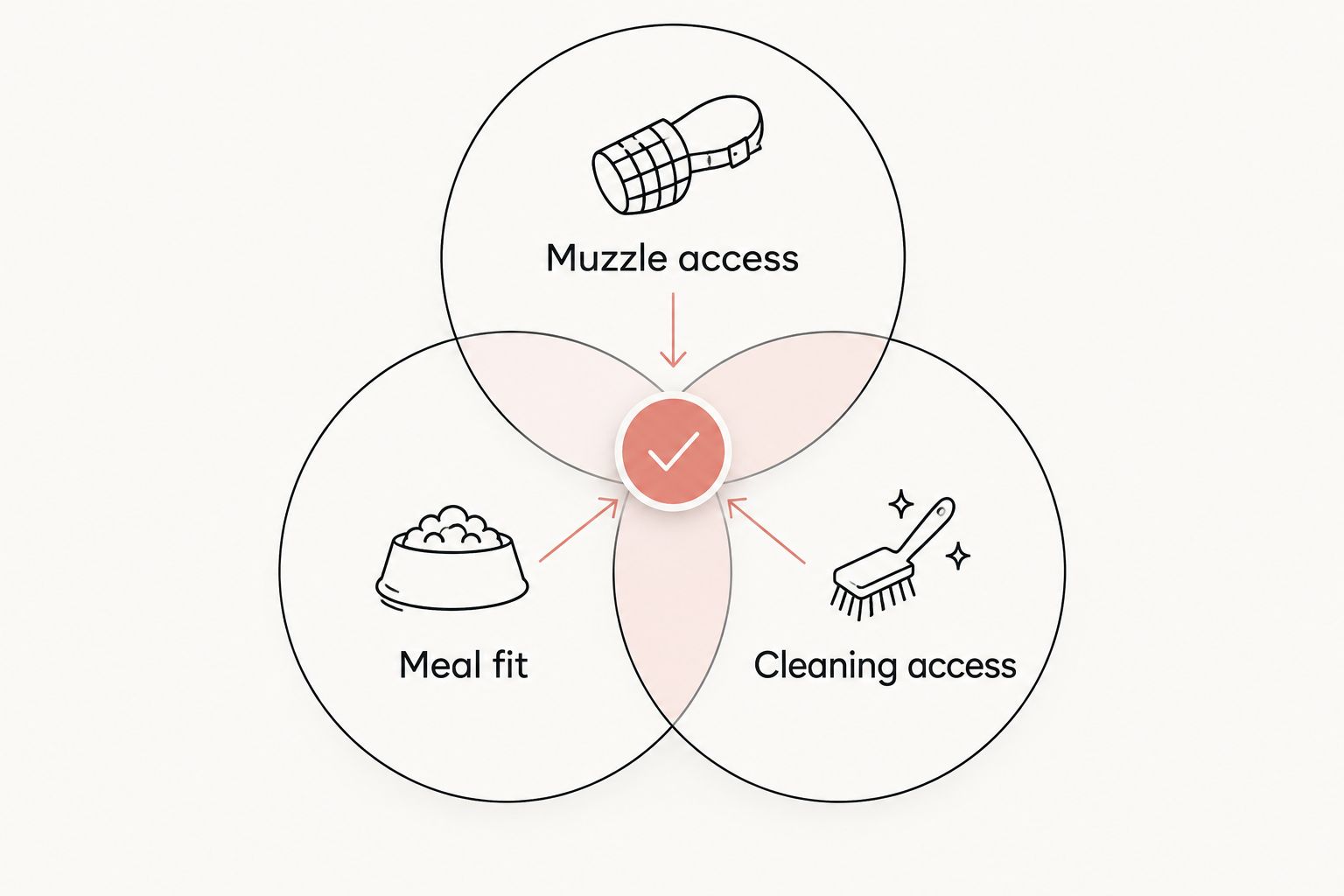
For dry food, check that kibble moves into accessible spaces rather than lodging beneath an insert. For wet food, choose a layout you can scrub completely. Follow product-specific washing instructions rather than assuming plastic, silicone, or metal automatically belongs in the dishwasher.
Where the Bella Bowl fits
Thezoomiezone's Loving Pets Bella Bowl is described as a no-tip, no-skid stainless steel dog and cat bowl. Those are ordinary bowl features, not evidence of slow-feeding obstacles.
Thezoomiezone's Loving Pets Bella Bowl is best for buyers seeking a regular stainless steel bowl, not purpose-built slow feeder dog bowls. Its useful role here is the comparison: stable placement and feeding complexity are separate features.
Bella Bowl pros: Stainless steel construction and a described no-skid, no-tip design.
Bella Bowl cons: The supplied description does not identify slow-feeding ridges or a raised center. It therefore does not belong in the slow-feeder ranking.
Best for: Regular feeding when you do not need built-in obstacles. Skip for the specific job of slowing access to food.
How these designs were ranked
This 2026 ranking prioritizes muzzle access, meal fit, food compatibility, stability, cleaning, and chewing behavior. Shallow ridges come first because they offer a straightforward starting layout; the other options serve distinct needs rather than competing for the same dog.
The ranking compares design characteristics, not measured eating-speed results. No universal slowdown percentage applies to these categories. Your dog's response to the particular feeder determines whether it is useful.
Which slow feeder should you choose?
Choose a shallow-ridge bowl if you are undecided. Match the size to your dog's muzzle and usual meal, then supervise the introduction.
Choose a silicone lick mat for spreadable wet food, a stainless steel raised-center bowl for a simpler cleaning layout, or an insert when compatibility with an existing bowl is confirmed. Leave deep mazes for dogs that already eat comfortably around simpler obstacles.
Once feeding ends, put the accessory away. Chew-tested toy claims do not transfer to bowls, mats, or inserts; feeding gear is not chewing gear.
FAQ
What's the best slow feeder dog bowl for a first-time buyer?
A shallow-ridge bowl is the best starting design in this guide. Choose channels your dog can reach comfortably and a feeding area that fits the usual measured meal.
Are slow feeder dog bowls suitable for puppies?
A slow feeder can suit a puppy when its size and channels allow comfortable access to food. Supervise feeding, use an accessible design, and remove the bowl if the puppy starts chewing it.
Which slow feeder works best for wet dog food?
A silicone lick mat suits spreadable wet food when your dog licks rather than bites the surface. Check food-contact suitability and washing instructions, and remove all residue after use.
Can flat-faced dogs use a slow feeder?
Flat-faced dogs need a feeder that leaves food accessible without forcing the face into narrow or deep channels. Judge the specific design by comfortable access rather than the slow-feeder label.
Is a stainless steel dog bowl automatically a slow feeder?
No, stainless steel describes the material, not the feeding layout. A purpose-built slow feeder needs obstacles such as ridges or a raised center; an open stainless steel bowl does not provide those features.
Does a slow feeder prevent bloat?
Do not treat a slow feeder as a guarantee against bloat. Discuss your dog's risk and feeding routine with your veterinarian, and seek emergency veterinary care for suspected bloat.
When should I replace a slow feeder?
Replace a slow feeder when cracks, sharp edges, detached pieces, or damage prevent thorough cleaning or comfortable use. Stop using it immediately if your dog bites pieces off or the attachment no longer holds as instructed.
What should I prioritize when buying a slow feeder in 2026?
Prioritize muzzle access, meal fit, and cleaning access when choosing slow feeder dog bowls in 2026. A simple feeder your dog uses comfortably is a better choice than a complicated maze that makes food hard to reach.
One last thing
The food left behind tells you whether the shape works. Watch where leftovers collect: accessible food your dog ignores and food trapped in unreachable grooves are different problems.
Check the feeder before adding more food or buying a harder maze. The goal is a comfortable meal with obstacles—not dinner your dog cannot finish.